Falls Prevention Training for Care Homes | ACSTRA
Discover practical falls prevention strategies for care homes, including risk assessments, staff training, safe mobility and CQC compliance.
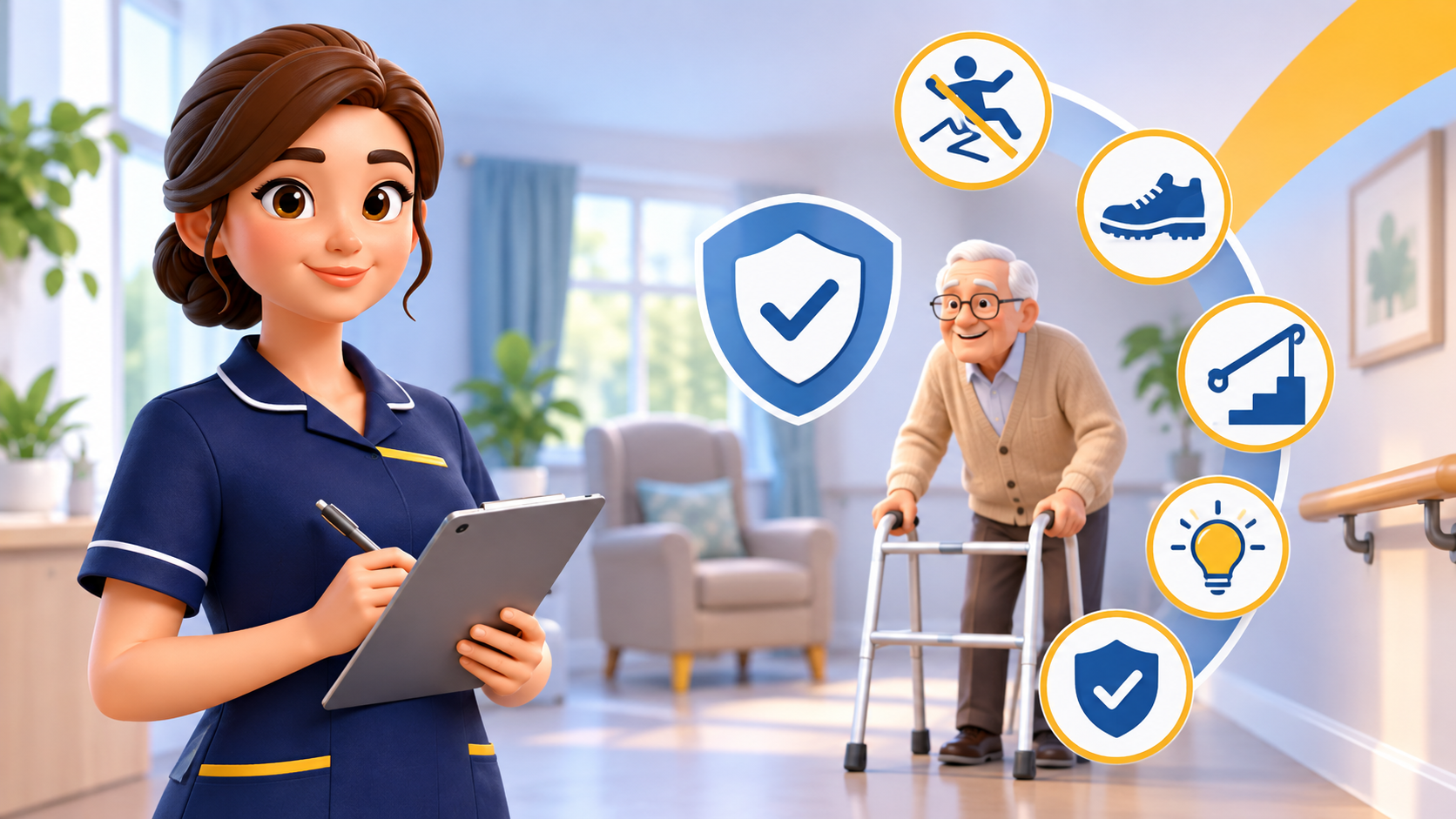
Falls Prevention in Care Homes: Practical Steps to Reduce Risk
Falls are one of the most common safety concerns in care homes, particularly among older residents, people living with dementia and individuals with reduced mobility. A fall can result in fractures, head injuries, hospital admissions, reduced confidence and a loss of independence.
For care providers, preventing falls is not simply about avoiding accidents. It is about understanding individual risks, maintaining safe environments, supporting mobility and ensuring staff know how to respond when concerns arise.
Falls prevention training plays an important role in helping care workers recognise hazards, support residents safely and reduce avoidable harm.
The Care Quality Commission (CQC) expects registered providers in England to assess and manage risks to people's health and safety. This includes identifying potential falls risks, implementing appropriate precautions and ensuring staff have the knowledge and competence needed to provide safe care.
However, preventing falls should never mean unnecessarily restricting someone's freedom or independence. Effective falls prevention balances safety with dignity, choice and person-centred care.
This guide explains the common causes of falls, how to complete a falls risk assessment in care homes, practical prevention strategies, staff responsibilities and the importance of ongoing training.
Why Falls Prevention Matters in Care Homes
Older adults may be more vulnerable to falls because of changes in mobility, balance, strength, vision and overall health.
Some residents also live with conditions that increase their risk, including dementia, Parkinson's disease, stroke-related disabilities and osteoporosis.
The consequences of a fall can extend beyond physical injury.
Residents may experience:
- Hip fractures and other broken bones
- Head injuries
- Pain and reduced mobility
- Fear of falling again
- Reduced confidence
- Increased dependence on care staff
- Hospital admissions
- Loss of independence
- Emotional distress
Falls can also affect the wider care service through increased monitoring requirements, incident investigations and additional support needs.
Falls prevention in care homes should therefore be an ongoing part of care planning, risk management and quality assurance.
A proactive approach helps providers identify risks before an incident occurs.
What Are the Common Causes of Falls in Care Homes?
Falls rarely have one single cause. They often result from a combination of personal, environmental and medical factors.
Understanding these factors is essential for effective prevention.
Reduced Mobility and Poor Balance
Residents may experience muscle weakness, joint problems, poor coordination or difficulty walking.
These issues can make everyday activities, such as standing from a chair or walking to the bathroom, more challenging.
Staff should observe changes in mobility and report concerns promptly.
Medication-Related Risks
Some medicines can increase the likelihood of falls by causing:
- Dizziness
- Drowsiness
- Low blood pressure
- Confusion
- Balance difficulties
- Increased urgency to use the toilet
Where medication may contribute to falls, staff should report concerns to the appropriate healthcare professional.
Medication reviews should be completed by suitably qualified professionals, particularly after unexplained or repeated falls.
Dementia and Cognitive Impairment
Residents living with dementia may experience difficulties with spatial awareness, judgement, orientation or recognising hazards.
They may also attempt to move independently without remembering that they require assistance.
Falls prevention should focus on supportive environments, appropriate supervision and maintaining independence wherever possible.
Environmental Hazards
Environmental factors can significantly increase falls risks.
Common hazards include:
- Wet or slippery floors
- Loose carpets or rugs
- Poor lighting
- Cluttered walkways
- Uneven flooring
- Inappropriate furniture
- Poorly positioned mobility aids
- Trailing cables
- Inaccessible call bells
- Unsuitable footwear
Regular environmental checks help identify hazards before they contribute to an accident.
Medical Conditions and Sudden Illness
Dehydration, infections, low blood pressure, visual impairment and other medical conditions can affect balance and mobility.
A sudden increase in falls may indicate a change in someone's health.
Staff should not automatically assume that repeated falls are simply part of ageing.
Falls Risk Assessment in Care Homes
A falls risk assessment in care homes helps identify individual factors that may increase the likelihood of falling.
Assessments should be person-centred and reflect the resident's health, abilities, preferences and environment.
What Should a Falls Risk Assessment Include?
A comprehensive assessment should consider:
- Previous falls and near misses
- Current mobility and balance
- Walking aids and equipment
- Medical conditions
- Medication-related risks
- Vision and hearing
- Cognitive impairment
- Footwear
- Toileting needs
- Environmental hazards
- Nutrition and hydration
- Changes in physical or mental health
- The person's preferences and independence
A history of previous falls is particularly important because it may indicate an increased risk of future incidents.
Staff should also consider when falls are most likely to occur.
For example, a resident may be at greater risk when getting out of bed at night or transferring from a chair.
When Should Falls Risk Assessments Be Reviewed?
Falls risk assessments should be reviewed when:
- A resident is admitted to the service
- A fall or near miss occurs
- Mobility changes
- Medication changes may affect balance
- A new medical condition develops
- The resident returns from hospital
- Staff identify new concerns
- The environment or equipment changes
Providers should also establish regular review arrangements based on individual risk.
A risk assessment should be a working document that informs daily care, rather than paperwork completed only during admission.
Practical Falls Prevention Strategies in Care Homes
Effective falls prevention strategies in care homes combine individual care planning, environmental safety and staff awareness.
1. Maintain Safe and Accessible Environments
Care homes should complete regular environmental checks.
Staff should ensure:
- Walkways remain clear
- Spillages are cleaned promptly
- Lighting is adequate
- Furniture is safely positioned
- Mobility aids are accessible
- Call bells are within reach
- Floors are maintained
- Bathrooms have appropriate safety equipment
Hazards should be reported and addressed promptly.
2. Support Safe Mobility
Safe mobility for elderly residents involves encouraging movement while providing appropriate assistance.
Staff should follow individual moving and handling assessments and care plans.
Support may include:
- Appropriate walking aids
- Supervised transfers
- Assistance with standing
- Safe use of mobility equipment
- Physiotherapy referrals
- Strength and balance activities
- Appropriate footwear
Residents should be encouraged to remain as active as safely possible.
Unnecessary restrictions on mobility can contribute to muscle weakness and reduced independence.
3. Review Medication-Related Risks
Managers should ensure concerns about dizziness, sedation, low blood pressure or repeated falls are referred for clinical review.
Care workers should never independently stop or change prescribed medication.
Medication-related concerns should be documented and communicated to the appropriate healthcare professional.
4. Promote Hydration and Nutrition
Dehydration and poor nutrition may contribute to weakness, dizziness and reduced physical resilience.
Staff should support residents with appropriate food and fluid intake according to their care plans.
Concerns about poor intake should be escalated.
5. Provide Appropriate Toileting Support
Some falls occur when residents attempt to reach the bathroom urgently or without assistance.
Care plans should consider:
- Individual toileting routines
- Night-time support
- Accessibility of bathrooms
- Appropriate mobility aids
- Prompt responses to call bells
- Continence support
The aim is to reduce risk while maintaining privacy and dignity.
6. Encourage Appropriate Footwear
Poorly fitting shoes, loose slippers and slippery soles may increase falls risks.
Staff should encourage suitable footwear that supports stability and comfort.
Falls Prevention Care Plans
Falls prevention care plans should explain the practical support each resident requires.
They should be based on individual assessments and clearly communicate what staff must do.
A care plan may include:
- Identified falls risks
- Mobility assistance requirements
- Walking aid instructions
- Transfer arrangements
- Environmental precautions
- Toileting support
- Relevant medical concerns
- Monitoring requirements
- Escalation instructions
- Review dates
Care plans should also explain how staff can promote independence safely.
For example, a resident who wishes to walk independently may benefit from a suitable walking aid, clear pathways and professional mobility assessment rather than unnecessary restrictions.
Staff Responsibilities for Falls Prevention
Fall prevention training for care staff helps workers understand their role in reducing risk.
Care assistants, senior carers, nurses and managers have different responsibilities, but all should contribute to safe care.
Care Assistants
Care assistants should:
- Follow individual care plans
- Use mobility equipment correctly
- Report changes in mobility
- Identify environmental hazards
- Support safe transfers
- Record falls and near misses
- Escalate concerns promptly
Senior Carers and Nurses
Senior staff may have additional responsibilities for monitoring risks, reviewing care arrangements, supporting staff and coordinating clinical referrals within their competence.
Registered Managers
Registered Managers should ensure:
- Falls risk assessments are completed
- Staff receive appropriate training
- Care plans are reviewed
- Equipment is maintained
- Incidents are investigated
- Repeated falls are monitored
- Corrective actions are implemented
- Staff competence is assessed
Managers should also ensure lessons from incidents are shared with the wider team.
What Should Staff Do After a Fall?
Clear post-fall procedures in care homes are essential for protecting residents from further harm.
Step 1: Assess Immediate Safety
Staff should remain calm and check whether the resident is responsive, breathing normally and showing signs of injury.
Do not automatically lift or move the resident.
If a serious injury is suspected, movement could make the situation worse.
Step 2: Seek Emergency Assistance When Required
Call 999 for life-threatening emergencies, such as unconsciousness, abnormal breathing or other signs of serious injury.
Suspected hip fractures, significant head injuries or other serious injuries require urgent medical assessment.
Staff should follow emergency service instructions and the provider's procedures.
Step 3: Follow the Post-Fall Protocol
If there are no immediate emergency signs, staff should follow the organisation's post-fall assessment and escalation procedures.
Where appropriate, a suitably trained professional should assess the resident before any assisted movement.
Step 4: Record the Incident
Documentation should include:
- Date and time
- Location
- Circumstances
- Witnesses
- Observed injuries
- Actions taken
- Medical advice received
- Notifications made
- Follow-up arrangements
Step 5: Review the Risk Assessment
Following a fall, the provider should consider whether the care plan, equipment, environment or support arrangements require changes.
Repeated falls should trigger further investigation and appropriate clinical referrals.
CQC Falls Prevention Requirements
CQC falls prevention requirements are linked to the wider legal duties placed on registered providers in England.
Regulation 12: Safe Care and Treatment
Regulation 12 requires providers to assess risks to people's health and safety and take reasonable steps to mitigate those risks.
Falls prevention supports this requirement through individual assessments, safe environments and appropriate care arrangements.
Regulation 17: Good Governance
Regulation 17 requires effective systems for monitoring quality, identifying risks and improving services.
Falls incident records, audits, risk assessments and action plans can help demonstrate effective governance.
Regulation 18: Staffing
Regulation 18 requires providers to ensure staff have appropriate qualifications, competence, skills and experience.
Staff must also receive suitable training, supervision and support.
Falls prevention training can help providers demonstrate that workers understand relevant risks and safe working practices.
Reporting Serious Falls
Some falls may trigger additional reporting obligations, depending on the circumstances and consequences.
These may include CQC statutory notifications, safeguarding referrals or reporting under RIDDOR where the relevant legal criteria are met.
Not every fall is automatically reportable under these arrangements.
Managers should assess each incident against the applicable requirements.
Step-by-Step Guide: Improving Falls Prevention
Step 1: Review Existing Falls Data
Analyse recent falls, near misses and incident reports.
Identify patterns involving locations, times, residents or activities.
Step 2: Review Individual Risk Assessments
Check that assessments reflect current mobility, medical conditions, medication-related risks and support needs.
Step 3: Inspect the Environment
Complete safety checks covering bedrooms, bathrooms, corridors, communal areas and outdoor spaces.
Step 4: Provide Falls Prevention Training
Ensure staff understand common risk factors, safe mobility, hazard identification and post-fall procedures.
Step 5: Assess Practical Competence
Where staff assist with transfers or moving and handling, ensure appropriate practical training and competency assessments are completed.
Online learning alone does not establish competence in hands-on moving and handling.
Step 6: Update Care Plans
Ensure prevention measures are individualised, practical and clearly communicated.
Step 7: Monitor and Improve
Review incidents, audit findings and staff feedback regularly.
Use the findings to improve care plans, training and environmental safety.
Common Mistakes to Avoid
Treating Falls as an Inevitable Part of Ageing
Although falls risks may increase with age, many contributing factors can be identified and reduced.
Using Generic Risk Assessments
Every resident has different needs.
Risk assessments should reflect individual circumstances rather than relying on identical controls.
Restricting Mobility Unnecessarily
Preventing falls should not involve removing independence without appropriate justification.
Restrictions must be lawful, necessary and proportionate.
Failing to Review Medication Risks
Medication-related dizziness or sedation may contribute to falls.
Concerns should be referred for appropriate clinical review.
Poor Post-Fall Documentation
Incomplete records make it difficult to identify patterns and demonstrate effective risk management.
Relying Only on Training Certificates
Certificates demonstrate completed learning, but practical competence should also be assessed where relevant.
FAQ: Falls Prevention in Care Homes
What Is Falls Prevention Training?
Falls prevention training helps care workers understand common causes of falls, recognise hazards, support safe mobility and respond appropriately following incidents.
Is Falls Prevention Training Mandatory for Care Staff?
CQC does not prescribe a universal standalone falls prevention course for every care worker.
However, providers must ensure staff have the training and competence necessary to manage risks relevant to their roles.
How Often Should Falls Risk Assessments Be Reviewed?
Assessments should be reviewed regularly and whenever circumstances change, including after falls, changes in mobility, medication-related concerns or hospital discharge.
What Are the Most Common Causes of Falls in Care Homes?
Common contributing factors include poor balance, muscle weakness, medication effects, cognitive impairment, environmental hazards, unsuitable footwear and acute illness.
Can Online Training Support Falls Prevention?
Yes. Online courses can support knowledge of falls risks, prevention strategies and staff responsibilities.
Practical moving and handling skills require appropriate hands-on training and competency assessment.
What Should Care Staff Do After a Resident Falls?
Staff should assess immediate safety, avoid unnecessary movement, seek medical assistance when required, follow the provider's post-fall procedures and document the incident.
How Can Care Homes Reduce Repeated Falls?
Providers should investigate contributing factors, review risk assessments, seek relevant clinical advice, update care plans and monitor whether prevention measures are effective.
How ACSTRA Can Support Falls Prevention Training
Preventing falls requires informed staff, effective risk assessments and a commitment to continuous improvement.
By providing appropriate falls prevention training, care providers can help workers recognise hazards, support residents safely and respond confidently when incidents occur.
ACSTRA provides online healthcare training for care homes, domiciliary care providers, supported living services and healthcare organisations across the United Kingdom.
Our online courses can support staff induction, refresher learning and continuing professional development.
Whether you are looking for falls prevention training, moving and handling awareness, health and safety or other healthcare courses, ACSTRA can help you explore suitable learning options for your team.
Explore our available courses:
Ready to strengthen your staff training programme?
For care providers looking to improve staff knowledge, reduce avoidable risks and strengthen training arrangements, contact ACSTRA to discuss suitable online learning options.
Support safer mobility, protect residents' independence and build a stronger culture of falls prevention with ACSTRA.