How to Recognise Sepsis in Care Homes and Domiciliary Care
Learn how to recognise sepsis in care homes and domiciliary care, identify warning signs and respond quickly to deterioration.
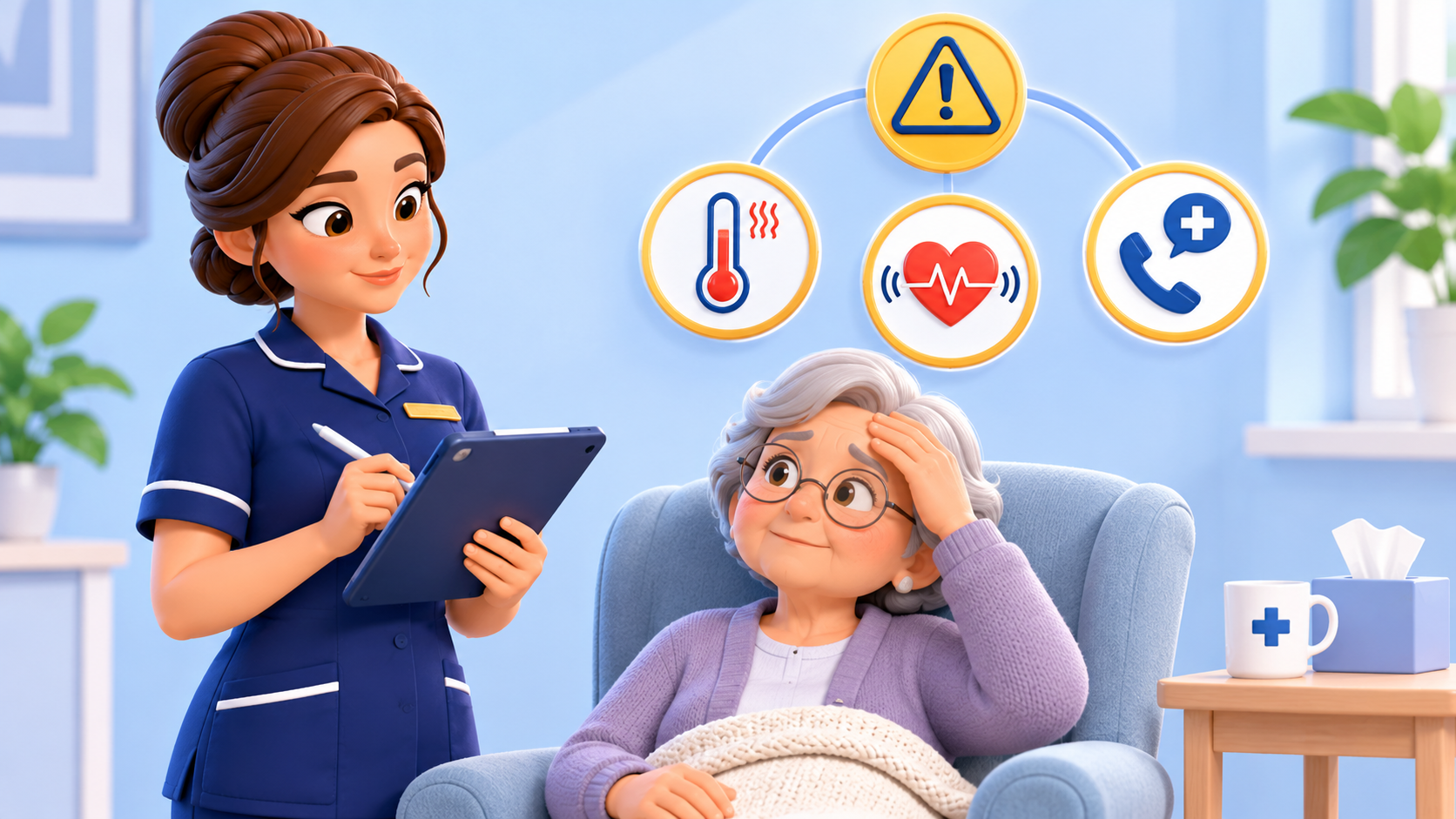
How to Recognise Sepsis in Care Homes and Domiciliary Care
Sepsis is a life-threatening medical emergency that can develop when the body's response to an infection causes damage to its own tissues and organs. It can affect anyone, but older adults and people living with long-term health conditions may be particularly vulnerable.
For care homes and domiciliary care providers, recognising possible sepsis early is essential. Care workers are often among the first people to notice changes in someone's health, behaviour or daily routine. Recognising these changes and escalating concerns promptly can make a significant difference.
Sepsis awareness training helps care staff understand the warning signs, recognise deterioration and know when urgent medical attention is required.
Staff do not need to diagnose sepsis. However, they must understand when someone may be seriously unwell and how to respond safely.
This guide explains sepsis awareness in care homes, the early warning signs of sepsis, how symptoms may present in older adults, and what care providers should include in staff training and escalation procedures.
What Is Sepsis?
Sepsis is a serious condition that occurs when the body's response to infection becomes uncontrolled and causes damage to tissues and organs.
It can develop following different infections, including:
- Urinary tract infections
- Chest infections and pneumonia
- Skin and wound infections
- Abdominal infections
- Infections associated with medical devices
- Other bacterial, viral or fungal infections
Sepsis can progress rapidly and requires urgent medical assessment and treatment.
According to NHS guidance, sepsis can be difficult to recognise because its symptoms may resemble other illnesses.
This is particularly important in adult social care, where people may already have complex medical conditions or communication difficulties.
Recognising sepsis in care starts with understanding what is normal for the individual and identifying when something changes.
Why Sepsis Awareness Training Matters
Care workers provide regular support with personal care, meals, medication, mobility and daily activities.
Because of this frequent contact, they may notice subtle changes before other professionals become aware of them.
For example, a domiciliary care worker may notice that someone who is normally talkative has become unusually quiet, confused or weak.
A care home worker may observe that a resident has stopped eating, appears unusually sleepy or is breathing faster than normal.
These changes do not automatically mean the person has sepsis, but they may indicate deterioration requiring medical attention.
Sepsis training for care staff helps workers:
- Recognise early warning signs
- Identify changes from a person's normal condition
- Understand common infection risks
- Recognise possible medical emergencies
- Respond appropriately to deterioration
- Follow escalation procedures
- Communicate concerns clearly
- Record observations accurately
- Work effectively with healthcare professionals
- Understand when to call 999
Training should focus on practical recognition and response rather than expecting care staff to make clinical diagnoses.
Early Warning Signs of Sepsis
The early warning signs of sepsis can vary between individuals.
Some people may develop obvious signs of infection, while others may show more general changes in their health or behaviour.
Possible warning signs include:
- New confusion or unusual behaviour
- Increased sleepiness or difficulty staying alert
- Faster breathing than normal
- Fever or unusually low body temperature
- Shivering or feeling very cold
- Rapid heartbeat
- Reduced urine output
- Severe weakness
- Unusual pain or discomfort
- Sudden deterioration in mobility
- Reduced appetite or fluid intake
- Feeling significantly more unwell than usual
Not everyone with sepsis has a high temperature. Some people, particularly older adults, may develop a low temperature or have no obvious fever.
Care workers should never wait for every symptom to appear before seeking help.
Any significant or unexplained deterioration should be taken seriously.
Sepsis Red Flags in Adults
Some symptoms indicate that a person may be critically unwell.
Sepsis red flags in adults include:
- New severe confusion, slurred speech or not making sense
- Very fast breathing or serious breathing difficulties
- Blue, pale or blotchy skin
- A rash that does not fade when pressed
- Being unusually difficult to wake or unresponsive
- Severe deterioration with suspected infection
Changes in skin colour can appear differently depending on skin tone. In people with darker skin, colour changes may be easier to notice on the palms of the hands or soles of the feet.
If a person has symptoms suggesting a life-threatening emergency or suspected sepsis with serious deterioration, call 999 immediately.
Care workers should clearly explain the symptoms and say that they are concerned about possible sepsis.
Do not delay emergency assistance while waiting for a manager to return a call or for additional symptoms to develop.
Sepsis Symptoms in Elderly People
Sepsis symptoms in elderly people can sometimes be less obvious than expected.
Older adults may not develop a high temperature, and some symptoms may initially be mistaken for general frailty, dementia progression or tiredness.
Staff should pay particular attention to:
- Sudden confusion
- New agitation or unusual withdrawal
- Reduced mobility
- Increased falls
- Sudden weakness
- Refusing food or fluids
- Increased sleepiness
- Reduced urine output
- Changes in breathing
- Sudden deterioration in personal care ability
For example, a resident who normally walks independently but suddenly cannot stand may need urgent medical assessment.
Similarly, someone living with dementia who becomes significantly more confused than usual may have an acute illness requiring prompt investigation.
Staff should not automatically attribute sudden changes to ageing or dementia.
A sudden change in mental state may indicate delirium, infection or another serious condition.
Recognising Deterioration in Care Homes
Care homes provide ongoing support, meaning staff often have opportunities to observe changes throughout the day.
However, deterioration can still be missed if information is not recorded or communicated effectively.
Care home staff should be trained to recognise:
- Changes in breathing
- Changes in consciousness
- New confusion
- Reduced fluid intake
- Changes in urine output
- Sudden loss of mobility
- Unusual weakness
- Signs of infection
- Significant changes in behaviour
Care homes should have clear procedures explaining how to report deterioration and obtain medical assistance.
Where staff are trained and authorised to monitor observations such as temperature, pulse, respiratory rate or oxygen saturation, these measurements can support escalation.
However, observations should not delay emergency assistance when serious symptoms are present.
Managers should also ensure that changes identified during one shift are communicated effectively during handover.
Recognising Sepsis in Domiciliary Care
Sepsis in domiciliary care presents particular challenges because care workers usually visit people for limited periods.
Staff may work alone and may not have access to clinical monitoring equipment.
For this reason, training should focus on recognising visible changes, listening to concerns and escalating promptly.
A domiciliary care worker may notice:
- The person is unusually confused
- They are unable to get out of bed
- Their breathing appears faster
- They have not passed urine
- They appear very weak
- They have stopped eating or drinking
- They have a wound that looks infected
- They report feeling seriously unwell
- Their usual behaviour has changed significantly
Workers should understand that they do not need to confirm a diagnosis before seeking medical advice.
If they suspect serious deterioration, they should act according to the urgency of the situation.
Care agencies should provide clear instructions for accessing emergency services, contacting healthcare professionals and notifying managers.
Sepsis Escalation Procedures
Effective sepsis escalation procedures help staff respond consistently when someone becomes unwell.
Care providers should establish clear guidance covering emergency and non-emergency situations.
When to Call 999
Call 999 immediately when someone has signs of a life-threatening emergency, including severe breathing difficulties, significant new confusion, reduced consciousness or other serious symptoms suggesting possible sepsis.
Explain:
- The person's location
- Their symptoms
- When the deterioration started
- Any known infection
- Relevant medical conditions
- Whether their condition is worsening
- That sepsis is a concern
Follow instructions from the emergency call handler.
When to Seek Urgent Medical Advice
Where a person has possible infection and concerning symptoms but no immediate emergency signs, arrange prompt clinical assessment through the appropriate GP, urgent care or NHS 111 pathway.
Do not wait until the next routine visit or shift if the person is deteriorating.
What to Do While Waiting for Help
Care staff should:
- Stay with the person where possible
- Follow emergency service instructions
- Monitor for further deterioration
- Keep the person safe and comfortable
- Avoid giving food or drink if the person is not fully alert or cannot swallow safely
- Prepare relevant care and medication information
- Contact the manager when safe to do so
- Record the incident and actions taken
Staff must work within their training and competence.
Communication During Sepsis Escalation
Clear communication is essential when contacting healthcare professionals.
The SBAR communication framework can help structure the information provided.
Situation
Explain what is happening.
For example: "I am concerned that this resident may be developing sepsis because they have suddenly become confused and are breathing much faster than normal."
Background
Provide relevant information, such as recent infections, medical conditions, medication and the person's usual health.
Assessment
Explain what staff have observed, including changes in behaviour, breathing, alertness or mobility.
Include any clinical observations taken by suitably trained staff.
Recommendation
Clearly state that urgent medical assessment is needed and ask what action should be taken.
SBAR supports effective communication, but staff should not delay calling emergency services to complete documentation.
Sepsis Prevention in Care Homes
Sepsis prevention in care homes focuses on reducing infection risks and recognising infections before serious complications develop.
Not every case of sepsis can be prevented, but good infection prevention and control practices help reduce avoidable risks.
Important measures include:
- Effective hand hygiene
- Appropriate PPE use
- Cleaning and disinfection
- Safe wound care within staff competence
- Monitoring for signs of infection
- Safe catheter care where relevant
- Good hydration support
- Appropriate nutrition
- Following vaccination and infection prevention guidance
- Prompt reporting of suspected infections
- Monitoring changes in residents' health
Staff should understand that identifying and treating infections early can reduce the risk of deterioration.
Providers should also ensure that infection prevention policies and training are reviewed regularly.
CQC Expectations and Legal Responsibilities
Sepsis awareness links to several regulatory responsibilities for providers in England.
Regulation 12: Safe Care and Treatment
CQC Regulation 12 requires providers to assess risks to people's health and safety and take appropriate steps to reduce those risks.
This includes responding appropriately to changing care needs and ensuring arrangements exist for medical emergencies.
Sepsis awareness supports these responsibilities by helping staff recognise possible deterioration and seek appropriate assistance.
Regulation 18: Staffing
Regulation 18 requires providers to ensure staff have the appropriate knowledge, skills, competence and support to carry out their roles.
Where staff support people at increased risk of infection or deterioration, managers should consider whether sepsis awareness and deterioration recognition training are needed.
Regulation 17: Good Governance
Regulation 17 requires effective systems for monitoring quality, managing risk and maintaining accurate records.
Training records, incident reviews, escalation procedures and audit findings can help demonstrate that providers actively manage deterioration risks.
Staff must understand that training is not a substitute for emergency procedures, clinical assessment or appropriate medical treatment.
Step-by-Step Guide: Building Sepsis Awareness Training
Step 1: Review the Needs of People Receiving Care
Identify people who may be at increased risk because of age, frailty, chronic conditions, reduced immunity, wounds or recurrent infections.
Step 2: Provide Sepsis Awareness Training
Arrange training covering sepsis, early warning signs, risk factors, deterioration and emergency escalation.
Step 3: Explain Local Escalation Procedures
Make sure every worker understands:
- When to call 999
- When urgent medical advice is needed
- How to contact managers
- What to do out of hours
- How to record concerns
- How to communicate with healthcare professionals
Step 4: Use Practical Scenarios
Include examples of an older adult developing sudden confusion, a person with a wound infection becoming severely unwell, or a home care client experiencing rapid deterioration.
Step 5: Check Staff Understanding
Use knowledge assessments, supervision discussions and scenario-based questions to check whether staff recognise emergency symptoms and understand what to do.
Step 6: Maintain Training Records
Keep certificates, completion dates, refresher information, competency discussions and policy acknowledgements.
Step 7: Review Incidents and Near Misses
After serious deterioration incidents, review whether warning signs were recognised and escalation happened promptly.
Use findings to improve procedures and staff development.
Common Mistakes to Avoid
Assuming Every Infection Will Cause a High Temperature
Sepsis may develop without a high temperature, particularly in older adults.
Staff should consider changes in overall condition.
Dismissing Sudden Confusion
New confusion should not automatically be attributed to dementia or ageing.
It may indicate an acute illness requiring urgent assessment.
Waiting for Several Symptoms
A person may be seriously unwell without showing every recognised symptom.
Staff should escalate promptly when there is significant concern.
Delaying Emergency Assistance
Staff should not wait for management approval before calling 999 in a medical emergency.
Poor Communication Between Shifts
Missing or incomplete handovers can delay the recognition of deterioration.
Changes in health should be recorded and communicated clearly.
Relying Only on Certificates
Training should be supported by scenarios, supervision and clear escalation procedures.
Not Reviewing Incidents
Providers should review cases where deterioration was missed or escalation was delayed and identify opportunities for improvement.
FAQ: Sepsis Awareness Training
What is sepsis awareness training?
Sepsis awareness training helps care workers understand what sepsis is, recognise early warning signs, identify deterioration and respond appropriately when urgent medical attention is required.
What are the early warning signs of sepsis?
Possible signs include new confusion, rapid breathing, fever or unusually low temperature, extreme weakness, reduced urine output and sudden deterioration.
What are common sepsis symptoms in elderly people?
Older adults may experience sudden confusion, weakness, increased sleepiness, reduced mobility, poor appetite, changes in breathing or general deterioration. A high temperature may not always be present.
When should care workers call 999 for suspected sepsis?
Call 999 when someone has symptoms suggesting a life-threatening emergency, such as severe breathing difficulties, significant new confusion, reduced consciousness or serious deterioration with suspected infection.
Can domiciliary care workers recognise sepsis?
Yes. Domiciliary care workers can recognise possible warning signs and report changes, although they are not expected to diagnose sepsis.
Their responsibility is to identify concerns and seek appropriate medical assistance.
Is sepsis awareness training mandatory for CQC?
CQC does not prescribe a universal standalone sepsis course for every care worker. However, providers must ensure staff are appropriately trained and competent to recognise and respond to risks relevant to their duties.
How often should sepsis training be refreshed?
Refresher frequency should reflect provider policy, service risks, staff responsibilities, relevant guidance and learning from incidents.
Training may need updating sooner when concerns or changes in practice are identified.
What evidence should care providers keep?
Providers should keep sepsis awareness training records, certificates, induction evidence, escalation procedures, supervision notes and records of learning following deterioration incidents.
How ACSTRA Can Support Sepsis Awareness Training
Recognising deterioration is an essential part of safe care.
By providing appropriate training, care providers can help staff understand the early warning signs of sepsis, communicate concerns and respond promptly when people become seriously unwell.
ACSTRA provides online healthcare training for care homes, domiciliary care providers, supported living services and healthcare organisations across the United Kingdom.
Our online courses can support staff awareness, induction, refresher learning and continuing professional development.
Whether you are looking for sepsis awareness training, infection prevention and control training, safeguarding or wider healthcare courses, ACSTRA can help you strengthen your staff development programme.
Explore our available courses:
Ready to start training your team?
For care providers looking to strengthen staff knowledge of infection risks, recognising deterioration and safe escalation, contact ACSTRA to discuss suitable training options.
Support your staff with the knowledge to recognise warning signs, act promptly and help protect the people in their care.